


In this article (5)
In 2026, e-commerce in Italy surpassed €66.6 billion, with 35 million active digital consumers. It's a mature market, but different from the one of a few years ago: new discovery channels, artificial intelligence in recommendation engines, and a high turnover between companies starting up and those closing down their online sales. Here's what has really changed and what it means if you want to launch or update an e-commerce store.
In 2026, e-commerce in Italy surpassed €66.6 billion, growing 6% compared to the previous year, with 35 million active digital consumers, according to data presented at the Netcomm Forum 2026 by the Politecnico di Milano's Observatory on online commerce. It's a mature market, but not the same one as five years ago: those selling online today are facing a more demanding consumer, new discovery channels, social media, not just search engines, and artificial intelligence that has moved into sales tools, not just chatbots.
If you're considering opening an e-commerce store, or already have one and are wondering what to update, this guide starts from 2026 data and arrives at concrete operational choices.
The e-commerce market in 2026 in three numbers
€66.6 billion in online sales in Italy, +6% over 2025, split almost evenly between products (€42.6 billion) and services (€24 billion).
35 million Italian digital consumers: a figure that has more than doubled (+119%) in eleven years.
87,000 Italian companies active online, but with high turnover: nearly 22,000 new openings in 2026 and over 23,000 businesses that stopped selling online in the same period.
Source: Netcomm / School of Management Politecnico di Milano, Netcomm Forum 2026.
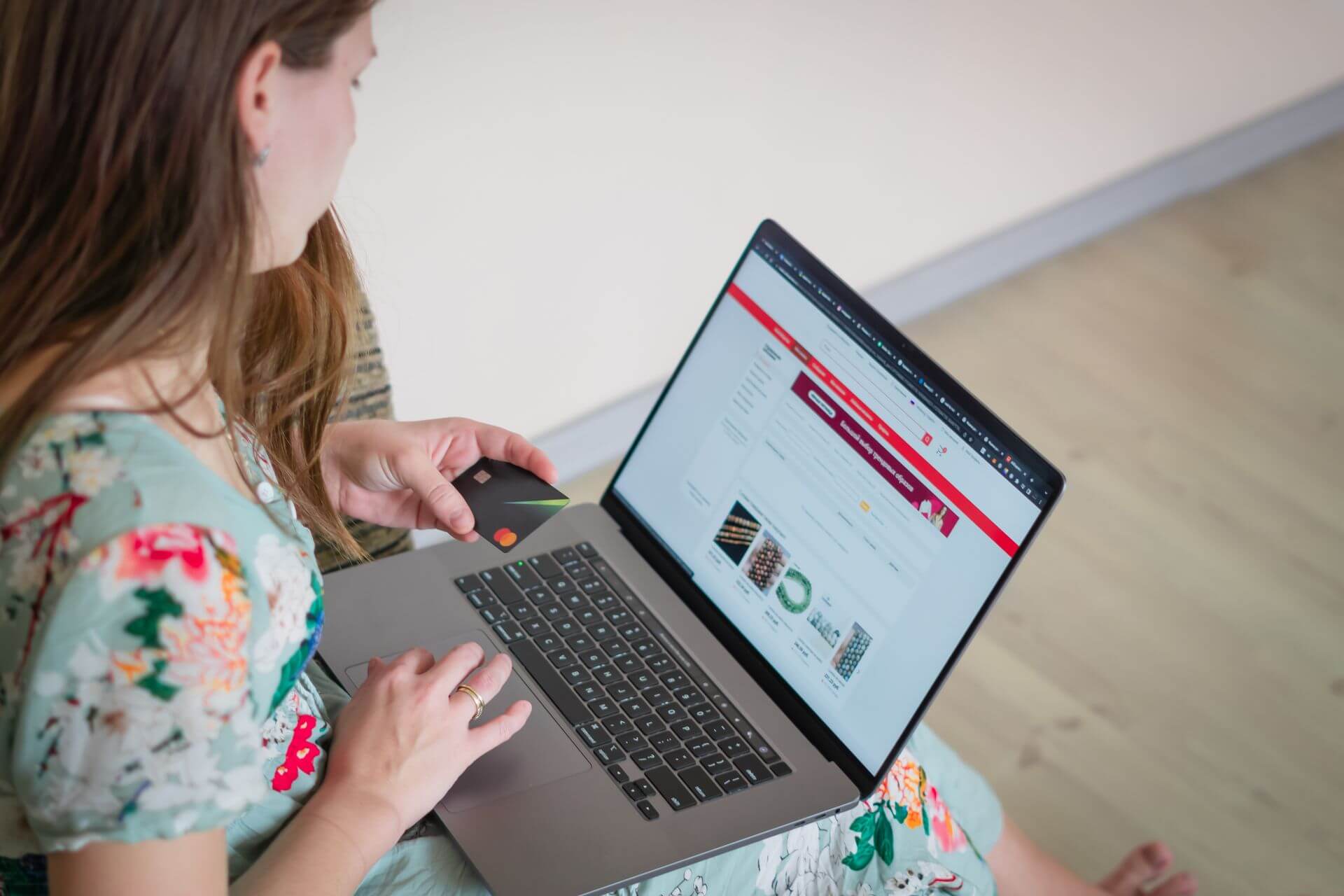
The payment step remains the most delicate part: every extra bit of friction at checkout costs conversions.
The third number is the one that matters most for those considering opening an online store: the market is growing, but simply being there isn't enough. The companies that shut down online in the same year that 22,000 others open are almost always the ones that started without a strategy, with a site copied from a generic template and no visibility on search engines.
The trends changing online selling
Artificial intelligence in personalization, not just customer service
In 2026, artificial intelligence in e-commerce isn't limited to support chatbots: it has moved into product recommendation engines, which no longer rely solely on "people who bought this also bought that", but on browsing behavior, purchase history and stated preferences. For a small e-commerce business, this means one practical thing: the platform you choose must natively support these tools, not bolt them on with third-party plugins that slow down the site.
Social commerce has become a sales channel, not just a discovery one
Until a few years ago, social media was used to build awareness, then people would buy on the website. In 2026, platforms like TikTok Shop integrate discovery and purchase into the same flow, without leaving the app. For those selling physical products to a young audience, not having a catalog connected to social media is now a missed opportunity, not just one less marketing channel.
Even small businesses now reach customers directly through social channels, not just through their website.
Mobile matters more for browsing than for conversion
Most sessions on Italian e-commerce sites start from smartphones, but the conversion rate remains higher on desktop, and the average order value from mobile is lower. The practical consequence: an e-commerce site in 2026 must be designed mobile-first for browsing, but with a checkout that minimizes the number of steps, because that's where sales are lost on smartphones.

People browse mainly from smartphones, but checkout remains the point where the purchase is won or lost.
Instalment payments are no longer a niche, and from 2026 they are regulated
In online payments, the digital wallet (Apple Pay, Google Pay and similar) is now the most used method, followed by the credit card. Alongside this, Buy Now Pay Later, paying in three or more instalments directly at checkout, has surpassed 9.9 billion euros in transactions in Italy, with growth of around 45% and roughly one in three Italians having used it at least once. From 20 November 2026, BNPL has become, to all intents and purposes, a form of consumer credit, with solvency checks, disclosure of the APR and a right of withdrawal: for online sellers, this means that offering this option is no longer a simple technical integration with a payment provider, but requires a provider that also handles these disclosure obligations on your behalf.
What this means for anyone wanting to open (or relaunch) an e-commerce in 2026
The data above is not theory: it changes the technical choices to be made even before choosing the colours of the site.
| What has changed | Resulting technical choice |
|---|---|
| AI in recommendation engines | A modern, modular platform, not a rigid one |
| Growing social commerce | A catalogue that can be linked to social channels, not just the site |
| Mobile for browsing, desktop for converting | A checkout with as few steps as possible |
| BNPL regulated as consumer credit | A payment provider that also handles disclosure obligations, not just collection |
If you want the step-by-step path from choosing the platform to the live site, we've already covered it in this practical guide: Building an eCommerce: here's how to proceed. Here we've focused on what has changed in 2026 and why it's worth taking it into account before you start.
Three common mistakes when taking a business online in 2026
Copying a generic template designed for a different sector. A clothing shop and a rental or services business have different purchase journeys: the catalogue and checkout need to be designed around the actual product, not adapted afterwards.
Treating social media as a showcase and the site as the only place where purchases happen. In 2026, anyone who doesn't link their catalogue to social channels loses out on impulse sales, which now happen inside the app.
Launching the site and then stopping. In 2026, almost 23,000 Italian companies left online selling in the same year that another 22,000 entered it: often the difference lies in maintenance, SEO updates and ongoing advertising, not just the initial site.
Why choose Kelta Web Agency
Building an e-commerce in 2026 means bringing together several skills that work in sequence: platform development, SEO, advertising and, increasingly, integration with social channels and new payment methods. Kelta Web Agency manages the whole journey in-house, without going through multiple separate suppliers:
E-commerce development: catalogue, payments (including compliant Buy Now Pay Later), order management.
Search engine positioning and Google Ads: to be found both through organic SEO and paid campaigns when speed is needed.
Custom apps and software, when the site alone isn't enough to cover a specific sales process.
Web design and visual identity, consistent across site, social media and printed materials.
If you already have a physical business and want to bring it online, or if you're considering an e-commerce from scratch, the first step is understanding which platform and structure best suit your product: that's the starting point of every consultation we offer.